
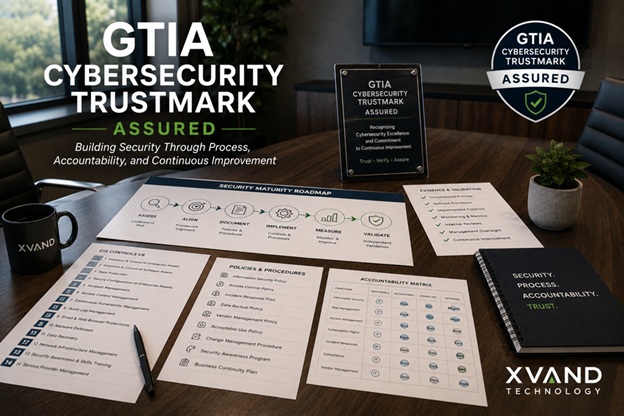
When I joined MSP-Ignite several years ago, I was looking for a way to become a better business owner. Like most MSP owners, I was trying to improve every part of the business at the same time: operations, leadership, sales, hiring, customer experience, profitability, and cybersecurity. What I did not fully appreciate at the time was how valuable it would be to spend time with other MSP owners who were willing to challenge each other rather than simply compare successes.
The best peer groups are not the ones where everyone agrees. They are the ones where members openly share what is working, what is not, and push each other to raise the bar. Over the years, many of the discussions in our group influenced how I think about running Xvand. One of those discussions ultimately put us on the path that led to earning the GTIA Cybersecurity Trustmark "Assured" designation.
The journey itself started long before we ever applied for the Trustmark. During one peer group meeting, another MSP owner described how they were taking clients through CIS-based assessments and then using the results during Technology Business Reviews. Instead of discussing only support tickets, projects, and budgets, they were showing clients how their environments aligned to a recognized framework, where gaps existed, and what improvements should be prioritized next. I remember thinking that it was a much more structured way of helping clients understand risk and make informed decisions.
That conversation changed how I thought about security frameworks. Up until then, I mostly viewed frameworks as something organizations pursued because they had compliance requirements. The more I learned, however, the more I realized that frameworks are valuable even when compliance is not the primary goal. They create consistency. They provide a common language for discussing risk. They help organizations move beyond opinions and toward measurable standards. Most importantly, they create accountability.
As those conversations continued, I found myself asking a broader question about our own organization: are we really as mature as we think we are when it comes to security, process, and accountability?
That is a more difficult question than it sounds. We already had security tools. We already had policies. We already had procedures. Our clients trusted us with critical systems and sensitive information, and we took that responsibility seriously. But confidence in your own work and independent validation of your work are not the same thing. Anyone can say they take security seriously. Every MSP website says exactly that. The real question is whether your policies, procedures, controls, and operational practices would stand up to independent scrutiny.
That realization led us to pursue the GTIA Cybersecurity Trustmark. The certification itself took about a year. The thinking that led to it took much longer.
What surprised me most during the process was how little of the work was actually about technology. As an MSP owner, that sounds strange to say. We certainly reviewed technical controls and security safeguards, but most of the effort was spent on something else entirely. We rewrote policies, improved procedures, clarified responsibilities, documented processes, established review cycles, collected evidence, and built accountability into areas that had previously relied too much on institutional knowledge. More than once we started what looked like a simple task and discovered that it required far more thought and refinement than we originally expected.
Before beginning this journey, I underestimated how much organizational maturity is required to align with a framework successfully. The technical controls are often the easier part. Building repeatable processes, assigning ownership, measuring progress, and maintaining discipline month after month is far more challenging. In many ways, the project became less about cybersecurity and more about building a stronger organization.
There were also moments when I questioned whether we had taken on more than we realized. Every time we completed one requirement, it seemed to uncover three more. A policy update led to a procedure change. A procedure change exposed a documentation gap. A documentation gap revealed the need for additional reviews or accountability. What initially looked like a straightforward certification effort turned into a much deeper examination of how we operate as a company. Looking back, that was probably the most valuable part of the process.
That is also why I believe the certification itself was not the hardest part. Building the organization capable of earning it was.
As we progressed through the process, another lesson became clear. Frameworks are not really about passing assessments. They are about creating structure. They force organizations to define responsibilities, document expectations, review performance, and continuously improve. Once we understood that, the goal became less about earning a designation and more about building habits that would make us better over the long term. The Trustmark became a milestone rather than the destination.
The value of this work became even more apparent when one of our clients asked about TX-RAMP. Because they work with the State of Texas, they understood that security and compliance expectations are continuing to increase and wanted to know how Xvand planned to support those requirements in the future.
A few years ago, I would have viewed a framework like TX-RAMP very differently. I would have seen it as a massive undertaking and honestly would not have been confident that we were ready to pursue something like that. Going through the Trustmark process changed my perspective. We learned how frameworks are structured, how controls map to requirements, how evidence is collected, how policies support technical safeguards, and how organizational discipline ultimately supports compliance.
In fact, since beginning this journey, Xvand has achieved TX-RAMP Provisional status. While TX-RAMP and the GTIA Cybersecurity Trustmark serve different purposes, I do not believe we would have been as prepared for that effort had we not first gone through the process of aligning ourselves to a recognized security framework and building the operational maturity that came with it.
More importantly, it demonstrated why this work matters to our clients.
Organizations in regulated industries face increasing pressure from regulators, auditors, insurance carriers, customers, and business partners. They are asked to complete security questionnaires, respond to vendor assessments, satisfy compliance requirements, and demonstrate that appropriate controls are in place. Working with an MSP that has gone through a rigorous framework alignment process helps support those efforts. It means the services being delivered are backed by documented, repeatable processes rather than good intentions alone.
Even for organizations that are not heavily regulated, the benefits are real. Frameworks create consistency. Consistency creates accountability. Accountability creates trust. Those concepts may not be as exciting as the latest cybersecurity tool or threat headline, but they are often far more important over the long run.
While I have told this story from my perspective, earning the GTIA Cybersecurity Trustmark was absolutely a team accomplishment. Every policy review, every process update, every meeting, every document revision, and every improvement required effort from people across the organization. There were no shortcuts and no easy wins. Just a group of people committed to improving how we operate and how we serve our clients.
If you had asked me several years ago whether Xvand would pursue something like the GTIA Cybersecurity Trustmark, I probably would have said it was not a priority. Looking back, that would have been a mistake. The process made us a better organization. It forced us to look critically at ourselves, improve areas that needed improvement, and establish a stronger foundation for the future.
Am I proud that we earned the Trustmark? Absolutely.
Am I even more pleased with what we learned while earning it? For sure.
Because the certificate hangs on a wall. The improvements we made along the way are what benefit our clients every day.
Frequently Asked Questions About Cybersecurity Best Practices
One of the best indicators is whether the MSP aligns its services and internal operations with recognized cybersecurity frameworks such as the CIS Critical Security Controls or the NIST Cybersecurity Framework. Organizations that follow established frameworks typically have documented processes, regular security reviews, defined accountability, and a structured approach to managing risk rather than relying only on security tools.
The CIS Critical Security Controls are a prioritized set of cybersecurity best practices designed to help organizations reduce common risks. Businesses use CIS Controls to evaluate their security posture, identify gaps, prioritize improvements, and create a practical roadmap for strengthening cybersecurity.
Cybersecurity frameworks provide value even when there are no formal compliance requirements. They help organizations identify security gaps, prioritize improvements, establish accountability, and create repeatable processes. They can also support cyber insurance readiness, vendor security reviews, and risk reduction.
Yes. An experienced managed IT provider can help implement security controls, document processes, support evidence collection, remediate identified gaps, and align technology practices with applicable standards. Compliance remains the responsibility of the organization, but the right MSP can significantly reduce the effort required to prepare for audits and assessments.
Organizations should evaluate whether the MSP follows recognized security frameworks, maintains documented processes, conducts regular security reviews, provides security awareness training, supports compliance initiatives, and demonstrates a commitment to continuous improvement. Independent assessments and third-party validations can provide additional confidence.
A cybersecurity assessment evaluates an organization's security controls, policies, processes, and overall risk posture against recognized standards or best practices. Most organizations should perform a formal assessment at least annually, while higher-risk organizations may benefit from more frequent reviews.
Compliance focuses on meeting specific requirements established by regulators, customers, or industry standards. Cybersecurity maturity is broader and reflects how consistently security practices are integrated throughout an organization. Mature organizations often find compliance easier because many required controls, processes, and accountability measures are already in place.
TX-RAMP, the Texas Risk and Authorization Management Program, is a security assessment and authorization program for cloud services used by Texas state agencies. Cloud service providers that store, process, or transmit state data may be required to obtain TX-RAMP authorization depending on the services they provide.
Customers, insurance carriers, regulators, and business partners increasingly want assurance that organizations are managing cybersecurity risks appropriately. Security questionnaires and vendor assessments have become common tools for evaluating risk, especially when sensitive data, financial information, or regulated information is involved.

0 Comments